
RAI: What are the benefits? Part 1
At trigalight, we live innovation—not just as a buzzword, but as daily practice. We continuously push the boundaries of what’s possible in precision and sustainability. Since January 2025, our RAI (Rapid Assembly Insert) has been impressing customers worldwide with its novel approach to mounting trigalight light sources in night sights.
In this first installment of our two-part information campaign, we examine the unique challenges trigalight must withstand and introduce the existing assembly methods designed to protect these exceptional self-luminous gas light sources. These fundamentals will help you better understand the groundbreaking advantages of the RAI in Part 2 and accurately assess the efficiency gains in assembly and disposal.
The Highest Standards for trigalight
What makes trigalight so special? At its core, it is a sealed glass vial coated on the inside with a specialized luminescent powder and filled with tritium gas. The extremely durable glass requires additional protection—whether through insertion into mounts or a specialized adhesive embedding. Both methods ensure not only protection but also millimeter-perfect alignment.
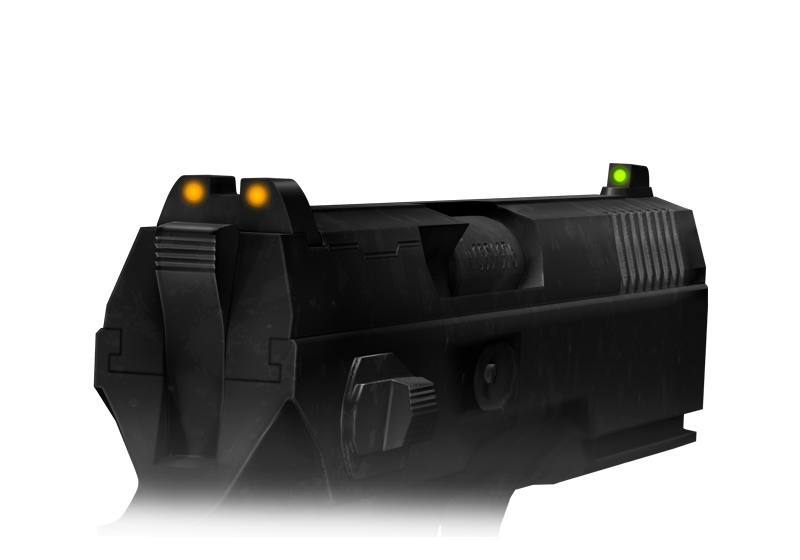
Use in firearms places exceptional demands on mounting. The assembly must withstand shocks and extreme acceleration. Imagine: with every shot, the light element and insert are subjected to up to 1,000 times the force of Earth’s gravity—an immense strain that only the highest-quality materials and craftsmanship can endure.
Next-Generation Inserts
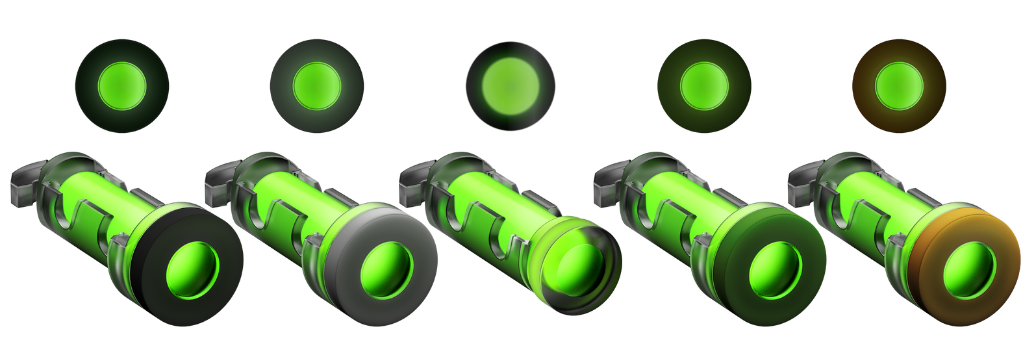
Our RAI represents the next evolution in insert technology. It consists of a specially engineered high-performance polymer that serves as a protective shell for the trigalight. Both the body and lens are made of transparent plastic to ensure maximum light transmission.
The compact version (without a daylight sight ring) measures just Ø2.0 × 7.25 mm—tiny yet packed with precision-engineered features for exact placement on the rear sight. For shooters who also benefit from enhanced contrast in daylight, we offer a version with a polymer daylight sight ring (Ø2.5 × 7.25 mm).
What sets it apart? Both the trigalight inside the RAI and the RAI itself in the sight are secured via an ingenious snap-fit mechanism—a prime example of micro-precision reflecting the cutting edge of technology!
The Assembly Process: RAI vs. Traditional Inserts
For years, mb-microtec’s classic insert solutions—such as the tactical insert with an aluminum sleeve or the NGI with a colored polymer sleeve—have proven their reliability. However, these established products, which feature transparent sapphire, require adhesive bonding into the sight. This is where our RAI comes in: it eliminates the need for glue, reducing assembly costs by up to 40%!
Traditional Inserts:
- Preparation: The sight and insert must be cleaned and prepared for gluing.
- Applying Adhesive: A binding agent or adhesive is applied to the insert or sight.
- Curing Time: The adhesive requires time to harden, which delays the assembly process.
- Permanent Installation: Once glued, the insert is difficult to remove without damaging the sight.


RAI Inserts:
- Preparation: Simply align the RAI to the sight.
- Mechanical Assembly: Press the RAI into place with the patented hook design – no adhesive required.
- Instant Readiness: The RAI is ready for use immediately after installation.
- Easy Replacement: If needed, the RAI can be removed with a special tool and replaced without causing damage

Sustainability in Practice through Recycling
The RAI not only excels in innovative assembly and functionality but also embodies our commitment to true sustainability. Every component of an RAI-equipped sight has residual value that can be meaningfully repurposed:
- Metal Sights: After their service life, the sight is either reused or sent for metal recycling.
- Polymer Housing: The high-quality thermoplastic polymer can be melted down and reused in new products.
- Glass: In our specially developed recycling facility, trigalight is processed into glass-luminescent powder, reducing special waste volume to an absolute minimum.
- Tritium: During recycling, the valuable tritium gas is safely recovered and prepared for reuse in new products.